Is AI really Going to Take Our Jobs?
- James Bowers III
- Jan 10
- 5 min read

Updated: Feb 28

Vocabulary Review
Sure-fire (adjective) – almost certain to succeed or work.
Example: Practicing every day is a sure-fire way to improve your speaking skills.
Land a job (phrase) – to successfully get a job.
Example: It took her six months to land a job in marketing.
Dismissive (adjective) – showing that you do not think something is important or serious.
Example: He was dismissive of the idea, even though others were worried.
Dystopia (noun) – an imagined future where life is very bad or unfair.
Example: The movie shows a dystopia where technology controls every part of life.
Far-fetched (adjective) – hard to believe or unlikely.
Example: The plan sounded far-fetched at first, but it actually worked.
Redundant (adjective) – no longer needed, especially because of change or technology.
Example: Many factory jobs became redundant after machines were introduced.
Up in arms (idiom) – very angry or upset about something.
Example: Employees were up in arms about the sudden policy change.
Hype (noun) – excitement or attention that is often exaggerated.
Example: The phone didn’t live up to all the hype online.
Flaw (noun) – a weakness or problem.
Example: The main flaw in the plan was the lack of time.
Hyper-focused (adjective) – extremely focused on one thing.
Example: She became hyper-focused on finishing the project.
To handle something (verb) – to manage or deal with a situation or task.
Example: He can handle stressful situations very well.
Bleak (adjective) – unlikely to improve; without much hope.
Example: The job market looked bleak during the recession.
Stipend (noun) – a small amount of money paid regularly, often by the government or an organization.
Example: The intern received a monthly stipend to cover basic expenses.
Subscription (noun) – a payment made regularly to use a service.
Example: She canceled her streaming subscription to save money.
Intended (adjective) – planned or meant to have a certain effect.
Example: The rules were intended to protect workers.
Thrive (verb) – to grow, succeed, or do very well.
Example: People tend to thrive when they feel supported and motivated.

Is AI Really Going to Take Our Jobs?

For decades, going to university for a degree in business administration or IT has been a sure-fire way to land a secure job with a comfortable salary; thanks to AI, however, that dream seems to be changing. While some people are dismissive of the potential of AI, others are worried that it will take away too many jobs. While everyone has their own theory on what the future will look like, ranging from free government paychecks to a dramatic, jobless dystopia, logic points to something in between, as the economy would not survive either of these.

While the thought of ChatGPT taking your job might sound like a bad science-fiction joke, it’s not really so far-fetched. Currently, job market experts estimate that between 60 and 80 percent of jobs can and will be replaced by AI. Nearly every influential business leader (from Bill Gates to Jack Ma) has given their own prediction on which jobs will be safest from an AI takeover, and how to avoid becoming professionally redundant. However, while many people are up in arms about what to do, others are not convinced by all of the AI hype. The biggest flaw in the idea of AI taking everyone's job is, well... who's gonna buy all the stuff?
Corporations are obviously hyper-focused on using AI to cut costs. In 2025 alone, American companies invested over $370 billion into AI automation and fired more than 55,000 workers as a result. Market analysts predict that by the end of 2026, more than two million people will be replaced by AI, and by 2030, at least 14 percent of global workers will have had to switch careers.
While everyone seems to agree that we cannot rely on AI to completely replace most experienced or skilled workers, it is clear that the entry-level white-collar workers will be the first ones replaced by AI. The prediction is that entry-level workers will simply disappear. Instead, a smaller number of more experienced workers will use or manage AI to replace them. While this doesn't sound so bad for the fortunate senior-level worker, the future of the entry-level employee looks unfortunately bleak.
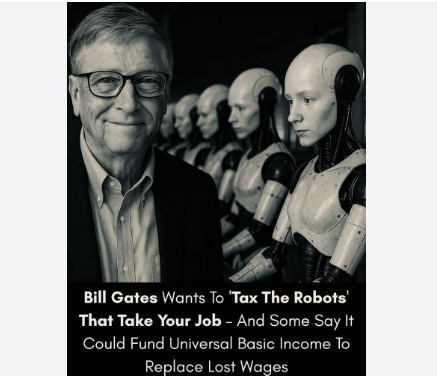
One solution is the idea of having a Universal Basic Income (UBI), where everyone receives a monthly government stipend regardless of their employment status. The idea might seem too idealistic or naïve, but governments have already been experimenting with this idea for years. The logic is simple - if a company replaces its accounting department with a 200 dollar subscription to ChatGPT Plus, and saves 50 million dollars, they will be taxed extra, and that money will be given back to the people. While this is arguably more than unlikely, several influential people, including Elon Musk, Bill Gates, and Donald Trump, have openly discussed it as a potential future idea.

But even if everybody does get monthly checks from the government, there is a bigger problem: UBI will never be enough to boost the market or grow the economy. The idea of a government stipend is intended to help people (and the economy) survive, not thrive. If 50% of the population is living on a fixed government "allowance," who is buying the new cars or the next super-ultra-double-pro-max iPhone? The entire engine of capitalism is fueled by the concept of people having disposable income and a desire to earn more.
Overall, it is true that the landscape of the job market is changing. Many career paths that were once the most dependable are either going to disappear or be completely transformed. However, a mass unemployment crisis or long-term economic collapse is highly unlikely because government and business leaders will certainly intervene before that happens. The only question left is: what can we do to put ourselves in a winning position in the new AI-led workforce?
Discussion Questions
Do you think AI replacing jobs is more exciting or more frightening? Why?
Do you think AI will make university more important or less important?
Which jobs do you think are safest from AI, and which are most at risk?
Would you feel comfortable relying on a government stipend to survive?
Do you think having a UBI would be a good idea?
Do you think companies should be taxed more for replacing workers with AI?
How can students prepare themselves for a future with fewer entry-level jobs?
Do you think AI will create more opportunities or more inequality?
What percent of your job could be done using AI?
Are you worried about AI impacting your job?
What skills do you think will matter most in the next 10 years?
Some people say that in the past, wealth divided people, but now that there is AI, laziness and hard work will divide people. What's your opinion?


Comments